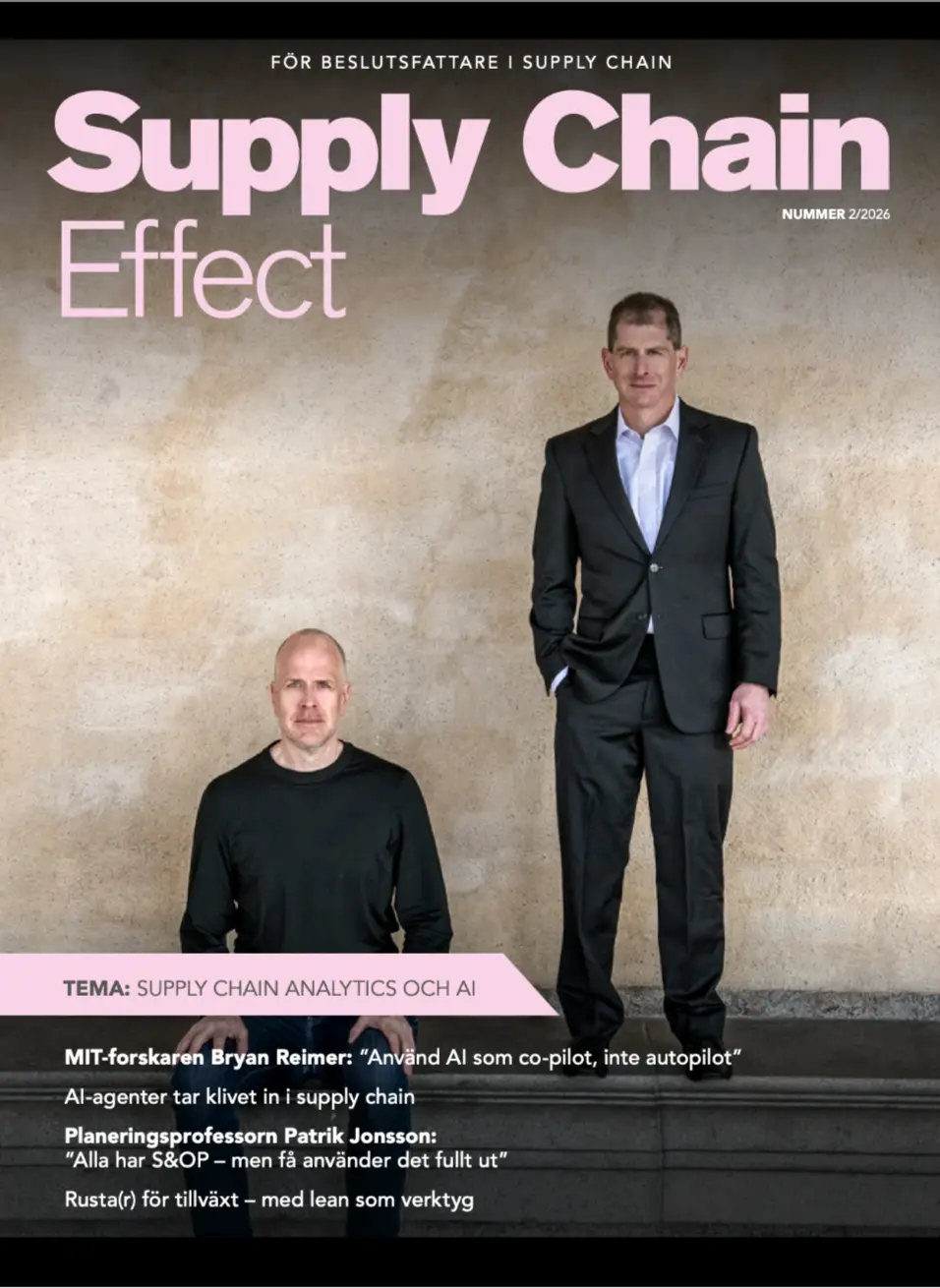

Nyligen genomförde Supply Chain Effect och KNAPP Nordics ett rundabordssamtal om den snabba utvecklingen och tillväxten inom lagerautomation, med särskilt fokus på detaljhandel/e-handel, trender, utmaningar och visioner för utvecklingen under kommande år. Här följer en sammanfattning av det högintressanta samtalet.
Deltagare under samtalet var Anders Bartholin, Langebæk, Anders Björklund, SAP, Christian Heimer, FTZ, Joakim Kembro, Lunds universitet, Norbert Stepnowski, Ingka Group, IKEA, Mikael Holmqvist, KNAPP Nordics och Stefan Karlöf, SCE, som modererade diskussionerna.
– Lager börjar alltmer likna produktionsanläggningar med avseende på hur de planeras, utrustas och drivs. I vår forskning ser vi att lagerprocesser blir mer som produktionslinjer där man även rekryterar människor med den typen av erfarenhet och kompetens, säger Joakim Kembro, som är docent och logistikforskare på Lunds Tekniska Högskola, vid Lunds universitet. Joakim forskar om lagerautomation och har just avslutat forskningsprojektet; Automationens påverkan på handelns lönsamhet, konkurrenskraft och hållbarhet, finansierat av Handelsrådet.
Norbert Stepnowski från Ingka Group, IKEA, ser en liknande utveckling och betonar att det finns möjligheter idag att lagerhålla mindre, att vara mer lean genom att använda AI och maskininlärning i supply chain.
– Med hjälp av AI och maskininlärning kan pro- duktionen och planeringen end-to-end optimeras, och på så sätt reduceras behovet av att lagerhålla. Det sker en rörelse från det traditionella sättet att tillverka, bygga upp lager, distribuera och sälja till att bli så lean som möjligt, utifrån ett end-to-end- perspektiv på försörjningsflödet, förklarar Norbert, som är Deputy Customer Fulfilment Manager på Ingka Group, IKEA.
Norbert, som startade sin yrkesbana som lagerarbetare på IKEA, berättar att koncernen har haft automation på agendan ganska länge, men främst för de riktigt stora distributionscen- tralerna. Under senare år har dock en omfattande automatisering påbörjats även i IKEA-varuhusen, med målsättningen att bygga ett upp ett tätt och flexibelt omnikanal-nätverk. I praktiken innebär detta att varuhusen blir en kombination av handelsplats och en automatiserad lagerhub för de ökande e-handelsflödena.
– Med en e-handel som har ökat från sju till 25 procent de senaste fyra åren har vi fått andra automationsbehov. Vi behöver komma närmare kunderna för att leverera kostnadseffektivt och bli mer hållbara, säger Norbert och framhåller att den automation som nu fokuseras är det som rör styckplocket, vilket är en stor utmaning i ett bolag med en extremt stor variation i sortimentet.
Mer fokus på smarta mjukvaror
Lika viktig som den fysiska automationsutrustningen är – med robotar, drönare och automatiska fordon med mera – är förstås olika mjukvaror. Ett stort utvecklingsområde för alla automationsbolag är därför mjukvara, och att integrera sina egna mjukvarulösningar med andra system och lösningar.
– Vi har utvecklat lagerlösningar i mer än 30 år och automation har alltid varit en del av vår strategi. Numera bygger vi även in AI och ML i våra lösningar, bland annat för att automatisera allt fler beslut, säger Anders Björklund som är Head of Digital Supply Chain på SAP. Han framhåller att det egna WMS:et Extended Warehouse Management är en av de marknadsledande lösningarna, som även integrerar väl med automationspartners som Knapp, Swisslog och andra ledande aktörer.
Kunddriven automation
En stor del av dagens logistikautomation motiveras just med ökade kundkrav och behovet av snabbhet. Här ser deltagarna en risk med att korta ledtider och snabbhet fokuseras för starkt och får negativa konsekvenser för hållbarhetsarbetet. Hur viktigt det faktiskt är att få snabb leverans varierar dessutom starkt i olika branscher och kundsegment.
– Mycket av automationsboomen är kunddriven, men i många fall överdrivs kundernas behov av snabbhet. Att få något levererat inom en timme är sällan vad kunden efterfrågar, risken är att man går för långt i sin strävan att ge en kundservice som inte efterfrågas, säger Anders Bartholin, som är partner på konsultbolaget Langebæk. Christian Heimer, som är Logistik- och inköpsdirektör på danska FTZ Autodele & Værktøj, håller med.
– Det finns absolut en risk att behovet av snabbhet drivs utan ett verkligt kundbehov. I FTZ gör vi än så länge det mesta manuellt, men vi bygger upp vår kunskap om automation och skapar business-casen och planerar, tillsammans med våra systerbolag i Meko-koncernen, säger Christian och fortsätter:
– I vårt centrala distributionscenter inför vi nu viss automation och nästa naturliga steg är att titta på hur vi skulle kunna automatisera lokala distributionscentraler/micro-fulfilment centers för att bättre hantera last-mile-flödet. Utmaningen är inte att automatisera, utan att automatisera på ett lönsamt och hållbart sätt, vilket vi tittar på just nu.
Närhet till kunderna
Samtalet kretsar en del kring centralisering kontra decentralisering av lager och hubbar, och deltagarna konstaterar att pendeln slår åt olika håll över tid. Just nu har samtliga stora svenska dagligvarukedjor byggt gigantiska, högautomatiserade centrallager i närheten av Stockholm-Mälardalen.
– De vill dra nytta av skalfördelar, optimera och ser att kostnaderna drar i väg om de decentraliserar, menar Anders Bartholin.
KNAPP Nordics vd Mikael Holmqvist ifrågasätter delvis den strategin och berättar att Knappkoncernen har levererat ett femtiotal så kallade micro-fulfilment centers (MFCs) världen över – det vill säga små lokala automatiserade och kundnära lager – och han undrar retoriskt varför det inte byggts några i Sverige ännu.
– I stället byggs det gigantiska, centraliserade lager nära Stockholm. Här ser jag en stor potential i att använda befintliga lokaler för att komma närmare kunderna, särskilt i e-handel av dagligvaror där det finns ett behov av samma-dag-leverans, och där det gäller att få en sömlös kombination av butikshandel, hemleverans och hämta själv att fungera.
Både centralt, regionalt och lokalt
Anders Bartholin tror att det kan bli för oflexibelt och kostsamt med micro-fulfilment centers. Men Norbert inflikar att man måste tänka långsiktigt och räkna på en ganska lång återbetalningstid på den typen av investeringar, och han konstaterar att det ofta behövs ett flertal olika lager- och plocklösningar.
– För oss handlar det inte om det ena eller det andra, utan om både centralisering och decentralisering. Här gäller det att hitta en så pass optimal lösning som möjligt. Det gäller att hitta rätt balans och inte överinvestera. Vi använder därför vår befintliga infrastruktur och utvecklar den till en kombination av traditionell butikshandel och moderna, hållbara lager- och leveranslösningar. Syftet är att erbjuda våra kunder en överkomlig, tillgänglig och hållbar leverans.
Joakim tror att pendeln slår tillbaka mot mer decentralisering, inte minst på grund av det ökade hållbarhetstänkandet.
– Det cirkulära tror jag kommer driva på detta. Det blir för dyrt att skicka varor fram och tillbaka från centrallager som ligger långt borta. Jag ser framför mig fler micro-fulfilment-lager och liknande lösningar där man drar nytta av befintliga butiksstrukturer och använder de fysiska tillgångar som finns på ett smart sätt.
”Följa John-mentalitet”
Joakim förklarar att de företag som investerade tidigt i lagerautomation ofta byggde fast sig i lösningar, och hans forskning visar att det därför finns en allmän försiktighet på dagens marknad.
– Företagen som vi har intervjuat vill vara innovativa, men inte nödvändigtvis när det gäller lagerautomation. Man vill ha maximalt flexibla lösningar för att inte bygga fast sig. Därför finns det en tendens till en följa John-mentalitet, där man kopierar en flexibel, fungerande lösning av rädsla för att satsa på fel häst.
Ökade kompetensbehov
En stor del av diskussionen ägnades åt behovet av ytterligare kompetens. Dels behovet av mer kompetens kring lagerautomation, tekniken och hur den används mest effektivt. Dels en generellt ökad kompetens kring de möjligheter som automation skapar för bättre effektivitet, kundnytta och stärkt konkurrenskraft. Alla är överens om att det saknas ett gemensamt språk mellan de som arbetar med logistik och supply chain och de som fattar besluten på lednings- och styrelsenivån.
– När vi startade vår verksamhet i Langebæk pratade vi med lagerchefer och logistikchefer. Nu är lösningarna mycket större och mer kostsamma och då måste vi få gehör hos vd och styrelse. Det kräver en helt annan typ av dialog, där man tar ett bredare nätverksperspektiv på investeringarna. Detta har ändrats tydligt de senaste tjugo åren, säger Anders Bartholin.
Norbert understryker vikten av att genomföra lagerautomation på ett ansvarsfullt sätt, med fokus på människan och den mänskliga aspekten av automatiseringen.
– På en snabbföränderlig arbetsmarknad gäller det att säkra att de manuella jobben i de alltmer automatiserade lagermiljöerna är meningsfulla och att medarbetarna ges goda möjligheter till kompetens- och vidareutveckling.
“The zero touch warehouse”
Samtalet avslutades med en spaning in i framtiden. Deltagarna delade bilden av en framtid där vi kommer få se fler automatiserade lager och mer varierade typer lager, för att åstadkomma både bättre kundservice, effektivitet och hållbarhet.
– Vår vision för framtiden sammanfattas i uttrycket The zero touch warehouse, där det mesta görs av robotar och där flödet är mer eller mindre helt automatiserat i lagret. Vi jobbar även mycket med användningen av data för att optimera driften i lagret och få ett helt nätverk av olika tekniker och andra tillgångar att samverka så effektivt som möjligt som ett integrerat system, säger Mikael och lägger till att detta i princip helt automatiserade flöde behöver dra nytta av relevanta data, optimera och få nätverket av olika tekniker och lager att samspela så bra som möjligt.
– Ja, oavsett om man automatiserar eller inte så krävs det förr eller senare att man adderar lagerkapacitet och det behöver man göra i sammanlänkade leveransnätverk med fler decentraliserade enheter som optimeras med hjälp av mjukvaror. Till stor del tror jag att detta kommer att drivas på av kraven på hållbarhet och cirkularitet, säger Joakim.
Visibilitet och kontroll end-to-end
Anders Björklund, SAP, upplever att marknaden och hans kunder fokuserar alltmer på digitala end-to-en-lösningar i försörjningskedjan, där lagret är en komponent i ett optimerat, datadrivet försörjningsflöde.
– Automation i lagret blir mer som en delkomponent i ett helt flöde där vi ser att fler avancerade tekniker används för att få visibilitet och kontroll end-to-end. Man vill ha kontroll över sina produkter på flera nivåer och under hela dess livscykel, bland annat med hjälp av digitala tvillingar, digitala trådar ända tills produkten slutanvänts och går tillbaka i ett cirkulärt flöde.
—-
Automationsbolaget KNAPP är en stor, global spelare med huvudkontor i Graz, Österrike. Företaget grundades 1952 av Günter Knapp och ägs fortfarande av familjen Knapp. Under senare år har koncernen vuxit snabbt och sysselsätter i dag ca 7 000 anställda varav ca 2 000 arbetar som utvecklingsingenjörer. Bolaget investerar årligen 800 miljoner kronor i produktutveckling.