AV HANS BERGGREN
Inom PipeChain har vi en vision att leverera mjukvarulösningar som stödjer automatiskt beslutsfattande i supply chains. Det är en vision som både bygger på att mognadsgraden för ökat digitalt samarbete inom industrins supply chains successivt stiger, vilket den nu gör. Det är också en vision som i allt högre grad faktiskt kan förverkligas tack vare utvecklingen av AI-stödda mjukvarulösningar.
När PipeChain grundades 1999 byggde vår vision på ungefär samma målbild, men på den tiden trodde vi att det var automatisk lagerpåfyllnad baserad på informationsdelning av lagersaldo, bruttobehov, faktiska leveranser och ett antal kritiska parametrar som skulle revolutionera världens supply chains. Nu ser vi istället en evolution framför oss, driven av en allt högre grad av digitaliserade flöden inom supply chains, allt större tillgång till kvalitativa flödesdata samt allt bättre förutsättningar för att bygga bra beslutsstödjande molnbaserade applikationer som med hjälp av AI kan guida användarna till rätt beslut. Detta kommer successivt att driva industrins supply chains mot effektivare processer och smartare flöden.
Identifiera er mognadsgrad
En viktig grund för att lyckas öka graden av samarbete inom supply chains, med digitaliserade flöden som den naturliga grunden för detta samarbete, är förståelsen för var man som företag befinner sig i sin mognadsgrad. Vad jag menar med detta är att de ansvariga i företaget förstår var företaget befinner sig och verksamheten kan utvecklas vidare till en allt högre mognadsgrad. Gartner har utarbetat en utmärkt beskrivning av fem mognadsgrader som vägledning för denna förståelse.
Gartners mognadsfaser i AI-utveckling
Fas 1: React — Silo-baserat autonomt och reaktivt tänkande
Den här fasen karaktäriseras av autonoma avdelningar/enheter inom företaget – t ex försäljning och tillverkning som driver logistiska prioriteringar via manuella processer och olika icke-integrerade system. Det saknas holistiska processer, standards och system över funktionsgränserna och därmed även koordination mellan dem.
Fas 2: Anticipate — Funktionstänkande för skalning och effektivitet
Logistikfunktionen centraliseras i syfte att öka effektivitet och produktivitet. Aktiviteter och prestationer följs upp från hela organisationen och rapporteras utifrån en helhetssyn, som ökar möjligheten att förutse efterfrågan och därmed förbättrar möjligheten att planera verksamheten. Fokus ligger på att skapa standardiserade processer och metoder i syfte att uppnå skalfördelar och ökad effektivitet för ökad lönsamhet.
Fas 3: Integrate — Integrera verksamheten med din supply chain
Nu integreras den logistiska funktionen med företagets hela supply chain. Fokus ligger på att förstå hur logistiken påverkar kundservice, inköp och tillverkning. Produktivitetsökningar och sänkta kost- nader uppnås genom högre grad av supply chainintegration (kunder, leverantörer, tredjepartslogistik).
Fas 4: Collaborate — Samarbeta med fokus på ditt Value Chain Network
I den här fasen är logistiken en integrerad del av företagets supply chain-vision, där avvägningar mellan lönsamhet och kundvärde kan göras planerat och medvetet. Kunder och leverantörer är integrerade digitalt och informationsdelningen är betydande, med hög grad av visibilitet ovanpå den rena transaktionsautomationen.
Fas 5: Orchestrate — Agera själv som dirigent av ditt nätverk för att skapa kundvärde
Logistiken och supply chain management-lösningarna stödjer nu horisontella processer genom företagets ekosystem av affärspartners, vilket utöver en effektiv och lönsam verksamhet öppnar upp för nya affärsmöjligheter. Affärsflödet genom företagets supply chain är också realtidsbaserat, vilket möjliggör ytterligare förbättrad visibilitet, bättre underbyggda beslut och även möjligheter till ökade marknadsandelar och tillväxt.
En del av företagets digitaliseringsresa
Att applicera AI/ML på sina supply chain-flöden kräver denna typ av resonemang. Dessutom befinner sig de flesta företag som vi kommer i kontakt med, innan vi börjat vår digitaliseringsresa tillsammans med kunden, i motsvarigheten till Gartners Fas 2 och på väg in i Gartners Fas 3. Detta innebär vidare att AI/ML i Fas 3 bör ta sikte på företagets egen förståelse för vad som händer i processerna samt möjligheten att med hjälp av AI/ML förbättra och förfina beslutsfattandet. I takt med att supply chain-arbetet mognar och utvecklas mot Fas 4, kan AI/ML-stödet i allt högre grad ta sikte på de kollaborativa processerna och förbättringar av det gemensamma beslutsfattandet för allt större värdeskapande.
IBMs maturity framework
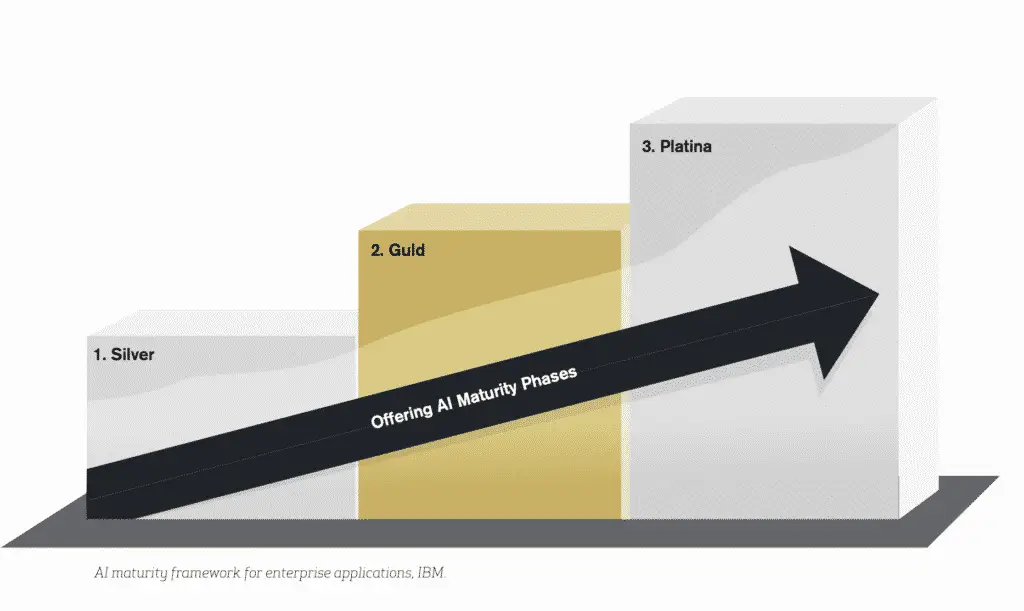
Inom AI/ML finns motsvarande mognadsresonemang, där t ex IBM i en rapport från 2021 (AI ma- turity framework for enterprise applications, March 2021) lyfter fram följande tre nivåer enligt bilden ovan:
Silver-nivån: På den här nivån utforskar företaget vad AI är för något, hur det kan påverka verksamheten, vilka verktyg och teknologier som krävs för att börja använda AI, vilka data och vilken datamängd som krävs, etc. Detta är en nivå som inte påverkar företagets affärer, utan en nivå som syftar till att skaffa sig erfarenhet och idéer till hur AI kan skapa värde för företaget.
Guld-nivån: På den här nivån skapar AI-lösningarna nytta för verksamheten, utan att personalen som berörs behöver vara dataingenjörer för att använda tjänsterna. Datakvaliteten och möjligheten att skapa värde via processautomation bevisas på denna nivå.
Platina-nivån: Nu har företaget nått en nivå på AI-användningen där den är affärskritisk för verk- samheten och organisationen. Företaget förlitar sig nu även på AI-baserade tjänster och ett avgörande fokus ligger på avvikelsehantering, där AI spelar en viktig roll. AI-förmågan är sofistikerad på den här nivån, vilket innebär att den även befinner sig i en fas där företagets AI-tjänster lär sig mer och mer successivt utifrån data från den verklighet företaget möter och den feedback organisationen förser AI-tjänsterna med.
Att börja sin AI-resa
Inom PipeChain har vi en vision att leverera mjukvarulösningar som stödjer automatiskt besluts- fattande i supply chain-flöden, som både effektiviserar flöden med omedelbart värdeskapande som följd, men som också skapar större flexibilitet och smartare flöden som ger stora mervärden på sikt. Vi har dock insett att både Gartners mognadsfaser för effektiva och leanbaserade supply chains och IBM:s motsvarande mognadsresonemang för införande av AI-stöd i verksamheten, innebär att den AI-resa vi nu ger oss in på måste starta på rätt nivå för att lyckas. Vi har därför valt att välja ett industrisegment som befinner sig i en så mogen ”Gartner-fas” som möjligt, d v s Automotive, och kunder till oss i detta segment som dessutom kommit långt i sin digitalisering. Vidare har vi utifrån IBM:S resonemang valt ”Fas 2 Gold”, där vår första AI/ ML-stödda applikation har tillgång till tillräckligt med kvalitativa data, baseras på en process som kan automatiseras i hög grad samt adresserar ett område med tillräckligt stor förbättringspotential för att användare hos våra kunder ska få ut tillräckligt stort värde av tjänsten.
Ett stort första steg för oss…
Vi ser därför med spänning fram emot att, tillsam mans med våra kunder, bygga färdigt vårt mjukvarustöd för analys av leveransplaner inom Automotive. Lansering sker våren 2022. Mjukvaran är självklart molnbaserad och innehåller som grund en visuell del, visibility av historiska planer och deras förändring över tid, kompletterad med traditionella KPI:er för prognoskvalitet, över- och underprognostisering samt leveransprecision. I tillägg till denna funktionalitet introducerar vi en AI-tjänst som baseras på ML (maskininlärning). Syftet med AI-tjänsten är att använda den som beslutsstöd vad gäller avvikelser som är ”värda” att fokusera och ta action på, eller uteblivna avvikelser där AI-tjänsten är så tränad att den flaggar för call to action för att det inte stämmer att avvikelsen uteblivit. Utgångspunkten för vårt AI-projekt har varit att skapa en så kallad MVP (Minimum Viable Product), där vi som första steg tar fram en så begränsad produkt som möjligt som samtidigt skapar tillräckligt stort värde för att vara relevant för marknaden.
…men inte för mänskligheten (ännu!)
Vår AI-resa tillsammans med våra kunder har bara börjat, men det kommer ändå att vara ett stort steg för oss även om det i detta skede inte är ett särskilt stort steg för mänskligheten. Vår vision är dock absolut att bidra till att göra supply chain-världen bättre med hjälp av automatiserat beslutsfattande!
—
Hans Berggren är i vd PipeChain Group