One of the leading players in the automation industry is the German family-owned company SSI Schäfer—a global player that is now expanding its presence in the Nordic region. Through major, high-profile projects with Coop and Apotea, the company is making a major push to establish a strong position in the Nordic market.
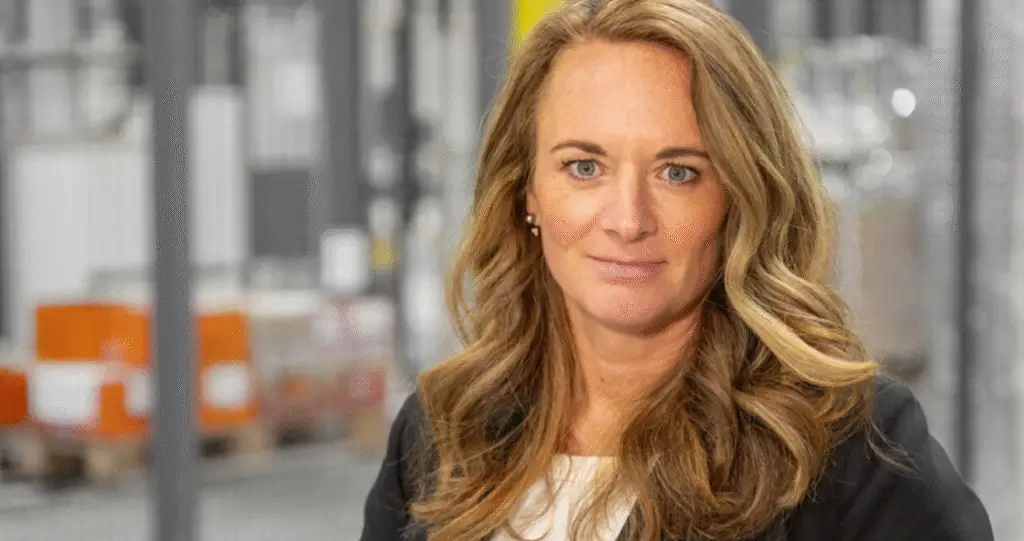
“The Nordic region is one of the most exciting markets for automation. We’re seeing many companies now making their second or third investment in automated solutions, which indicates a high level of maturity. This makes it a region with enormous potential,” says Malin Schäfer, who has been CEO of SSI Schäfer Nordic for just over half a year—though she is not related to her new employer.
Local Presence and Community Ties
Malin has previously worked on many large-scale logistics projects focused on automation, where she has seen how technological solutions can fundamentally transform a company’s logistics flow and how the implementation of such systems often requires both technical expertise and organizational change management. Her mission moving forward is clear: to take SSI Schäfer’s international experience and technological leadership and translate them into a strong local presence and close relationships with customers in the Nordic region.
– An automation project is really just a small part of a much larger journey. Success requires technology, but just as much collaboration, trust, and an understanding of each customer’s specific situation. That’s why it’s so important that we’re close to our customers and have the right expertise on hand.
Groundbreaking projects
One of the largest automation projects in the Nordic region right now is the much-talked-about project for Coop—a fully automated warehouse that not only stands out in the region but is also considered one of the most advanced automation solutions in Europe. Malin describes it as one of the most exciting projects she’s been involved in. Strategically located in the heart of Sweden, the facility will handle the distribution of goods to Coop’s approximately 800 stores across the country. Most of the flow passes through two robotic systems that automatically pick individual packages of both refrigerated and room-temperature products. The result is a sustainable, high-tech logistics hub processing over 600,000 picks per day.
“The Coop project is groundbreaking in many ways. It’s impressive to be able to create such a comprehensive solution that handles everything from picking to distribution with minimal human intervention.” And we’re already seeing results in the form of increased efficiency and reduced costs,” she says.
”Fast, efficient, safe, and sustainable”
The project with Coop involved several advanced technologies, including a high-performance shootinglogistics systems, smart picking robots, and AI-based analytics to optimize warehouse management. By leveraging real-time data and advanced analytics, a proactive approach to predictive maintenance is also made possible.
“It’s about creating a system that is not only fast and efficient, but also secure and sustainable,” Malin emphasizes.
E-commerce Logistics
In addition to the extensive collaboration with Coop, Malin also highlights Apotea as a clear example of SSI Schäfer’s deep expertise in e-commerce logistics. The company began the collaboration as an automation partner for Apotea’s facility in Morgongåva. When Apotea later decided to establish a new, highly automated warehouse in Varberg—with the capacity to handle up to 50,000 more orders per day—SSI Schäfer was entrusted with the role of turnkey supplier. The new warehouse is a strategic initiative to shorten delivery times to southwestern Sweden, and SSI Schäfer’s highly efficient solutions play a central role in achieving that goal.
“Apotea is another exciting example of how we can tailor our e-commerce solutions. Here, we’ve really been able to demonstrate the great flexibility of our systems,” says Malin.
Innovative and customer-centric culture
Malin describes SSI Schäfer’s corporate culture as innovative, yet stable. She emphasizes the importance of the company maintaining long-term customer relationships and developing sustainable solutions.
– SSI Schäfer has always strived to be at the forefront of technology and automation. But for us, it’s about much more than technology; understanding the customer’s needs and creating solutions that truly make a difference is just as important. An important part of that effort is the company’s own culture. Malin emphasizes here that collaboration and openness are core values at the company—values she feels strongly about.
“We work hard to create a culture where employees feel confident and eager to share ideas and test new solutions. That’s how we drive innovation forward,” she says, emphasizing the importance of having strong internal expertise, including at the regional level, says Malin.
The Nordic region is leading the way
The fact that the Nordic region is a leader in automation is one of the reasons the company views the region as a strategically important market.
– The Nordic region is a market in constant flux, and that requires us to both nurture what we’ve already built and be prepared to meet new needs. An automation project is really just a small part of a much larger journey. Some companies are making their second or third investment, while others are renovating, relocating, or expanding—all while entirely new players, often international ones, are establishing themselves in the Nordic market. This means that, as a supplier, we’re constantly facing new conditions and requirements, but we also have the opportunity to carry our experience from one project to the next,” says Malin.
”There Are No Perfect Automation Projects”
Malin describes each project as a transformation, in which managing change, communication, and collaboration are just as important as installing new technology:
– There are no perfect automation projects; anyone who says otherwise is lying. Challenges always arise, and what matters is how we tackle them together. You have to go into a project like this with the right mindset: that it’s meant to last, that it’ll be tough at times, but that it’s worth it.
Customer Focus in Practice
By increasing its investment in customer-facing resources and internal expertise, SSI Schäfer has strengthened its ability to meet customer needs, both in operations and development. This increased customer focus is not merely an ambition, but a way of working that is intended to permeate the entire organization—one that requires understanding each customer’s true needs, delivering with precision, and ensuring that nothing falls through the cracks.
– An automation project isn’t complete just because the system is up and running. Only when all loose ends have been tied up, and there’s nothing left to worry about, are we finished. And that’s when the next step begins in a journey that never really ends. An automation system requires constant improvements, adjustments, and development as conditions change. It’s important to nurture, refine, optimize—in short, to simply love your automation.
She describes a way of working in which structure and perseverance are key components. A clear and shared action plan is required—one in which both parties know what needs to be done, when, and by whom. This is especially true during the transition from project to operations, when quickly addressing remaining issues is crucial for building long-term trust.
“For me, customer focus is about being consistent. It’s about standing firm when the going gets tough, and delivering on what we’ve promised. Automation is a journey of transformation—and to succeed, both we and the customer need to work toward the same goal, every step of the way,” she says.
Focus on Sustainability
Sustainability is an important aspect of warehouse automation that SSI Schäfer focuses on. And it is important to implement technologies that are not only efficient but also sustainable. In recent years, SSI Schäfer has intensified its focus on green solutions, which include everything from energy-efficient conveyor belts to recyclable packaging materials.
“We see how energy-saving solutions and optimized logistics systems can reduce both costs and environmental impact. For us, it’s about creating systems that are future-proof and adaptable to both today’s and tomorrow’s needs,” Malin concludes.
Interview and text by Marika Karlöf