
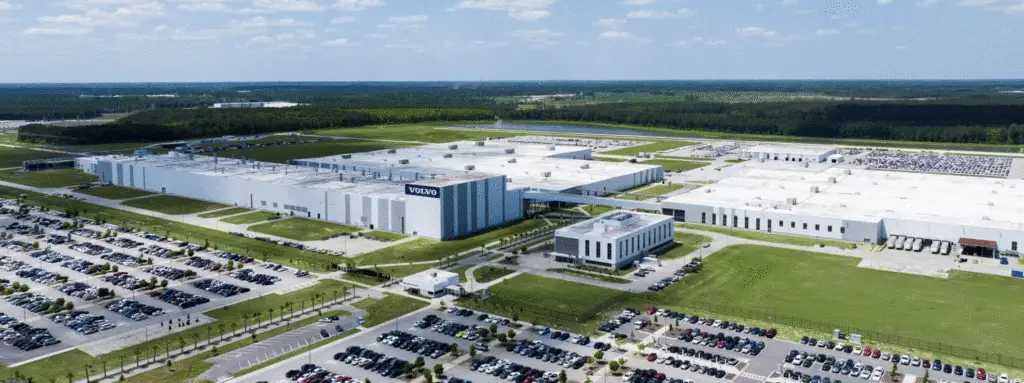
Volvo Cars moderna fabrik i Charleston, South Carolina, ska nu öka sin produktion avsevärt och anställa ytterligare 4 000 medarbetare. Med start 2026 kommer tiotusentals exemplar av trotjänaren XC60 – Volvos mest populära i USA – att tillverkas i Charleston. Enligt nuvarande tullregler kan bilarna därefter exporteras till Europa helt tullfritt.
Åtgärden, som är en direkt följd av USA:s handelstullar, är ett exempel på hur många företag nu flyttar sin tillverkning till USA för att säkerställa sina marginaler på den stora, lukrativa USA-marknaden. Redan i början av året, när den amerikanska administrationen, aviserade sina handelstullar konstaterade Volvo Cars vd, Håkan Samuelsson, att en fortsatt regionalisering av den globala ekonomin är att vänta.
– Bilindustrin kommer att se en tydlig regionalisering efter USA:s fordonstullar på 25 procent, konstaterade han i samband med bolagets årsstämma i april.
Med regionalisering menar han i praktiken att den globala världsmarknaden i huvudsak kommer att delas upp i tre: USA, Europa och Asien, där dessa fungerar som egna regionala marknader för inköp, produktion och försäljning.
”Darwins lag”
Genom att producera närmare sina lokala marknader minskas leveranstider och fraktkostnader, samtidigt som regionaliseringen gör att företag kan anpassa sig till lokala krav och andra förhållanden. Och även om produktionen i USA skulle bli dyrare så motverkas detta av lägre kostnader för frakt, lagerhållning och tullkostnader. Vid årsstämman konstaterade Samuelsson att det är Darwins lag som gäller, det vill säga ”Survival of the fittest”:
– Och i ett sådant läge är det bara att följa Darwins lag och anpassa sig snabbare än konkurrenterna.
XC60 är Volvo Cars bästsäljare i USA, försäljningen av bilmodellen med ökade närmare 23 procent enbart under första halvåret i år. Framöver ska XC60 tillverkas som en bensin-elhybrid och som en laddhybrid.
Källor: Wall Street Journal, TT och SvD.