AV ERIK SANDBERG OCH ARNE ANDERSSON
För att lyckas med cirkulära affärsmodeller krävs inte bara hållbara produkter och engagerade kunder – utan också en välfungerande, kostnadseffektiv logistik. Detta gäller inte minst för alla de svenska detaljhandelsföretag som på senare år har kompletterat sina linjära affärsmodeller med en eller flera cirkulära initiativ.
I denna artikel, som baseras på ett nyligen avslutat forskningsprojekt finansierat av ASTER – Alliance for sustainable E-commerce, delar vi med oss av våra insikter om logistikens betydelse för att skapa lönsamhet i detaljhandelns cirkulära omställning. Ett viktigt steg mot en mer hållbar handel är att införa och skala upp cirkulära affärsmodeller. Detta gäller inte minst de konsument- och handelsnära modeller som bygger på att förlänga livslängden eller utöka användningen av en produkt, exempelvis genom begagnatförsäljning, uthyrning, eller reparationer. Intresset för dessa har vuxit explosionsartat de senaste åren och enligt Svensk Handels Preloved-indikator omsatte exempelvis den svenska begagnatmarknaden under första halvåret 2025 7,4 miljarder SEK.
Svårt skala cirkulära initiativ
Utvecklingen drivs av en lång rad olika aktörer, såsom olika marknadsplatser och ett växande antal företag som är ”born circular”. En annan typ av aktör som vi tittat närmare på inom ramen för vårt forskningsprojekt är alla de detaljhandelsföretag med en traditionell linjär affärsmodell som har kompletterat den med en eller flera cirkulära initiativ. Vi tycker oss se ett allt större intresse från dessa företag att på allvar ta klivet mot en mer cirkulär ekonomi, men också att det för dessa aktörer är svårt att skala upp sina cirkulära verksamheter till att bli en naturlig och lönsam del av kärnaffären. Ofta stannar satsningarna vid pilotprojekt eller sidoverksamheter. En avgörande fråga för svensk detaljhandel är därför hur man kan skapa en ekonomisk lönsamhet i cirkulära affärsmodeller som i sin tur kan leda till att den cirkulära omställningen tar fart på allvar.
Logistiken en nyckel
Vår utgångspunkt är att en stor del av svaret på denna fråga finns i logistiken. Det är genom logistikens olika grundaktiviteter, det vill säga transporter, hantering och lagring, som cirkulära flöden realiseras. Dessa aktiviteter spelar inte bara en uppenbart stor roll i själva förverkligandet av cirkulära flöden, utan också för att göra dem lönsamma och konkurrenskraftiga. En välfungerande logistik är viktig för att skapa kostnadseffektivitet, men också för att skapa kundvärden av olika slag, såsom bekväma insamlingsmöjligheter och ett större, mer varierat produkterbjudande. Vi har under projektet intervjuat och besökt ett antal svenska detaljhandelsföretag – bland andra Polarn O. Pyret, Stadium, Care of Carl, Cervera, MQ, Elgiganten och Aplace – som på olika sätt har kompletterat sina linjära affärsmodeller med olika cirkulära initiativ. Genom dessa fallstudier har vi identifierat ett antal centrala logistikutmaningar som påverkar lönsamheten i cirkulära affärsmodeller. Att på allvar ställa om till en mer cirkulär ekonomi är ofta utmanande utifrån ett logistikperspektiv. I en linjär verksamhet har ofta logistiken noggrant optimerats för att flytta stora volymer av nya varor snabbt och kostnadseffektivt från producent till konsument. I cirkulära affärsmodeller börjar flödena ute hos konsumenterna, vilket inte ger samma förutsättningar till skalfördelar. Unika produkter med olika slitage, ålder och funktionalitet ska samlas in, bedömas, eventuellt repareras eller renoveras för att därefter säljas, hyras ut eller doneras vidare. Detta för med sig stora logistikutmaningar i en mer komplex, mer oförutsägbar och mindre standardiserad omgivning.
Cirkulära logistikaktiviteter
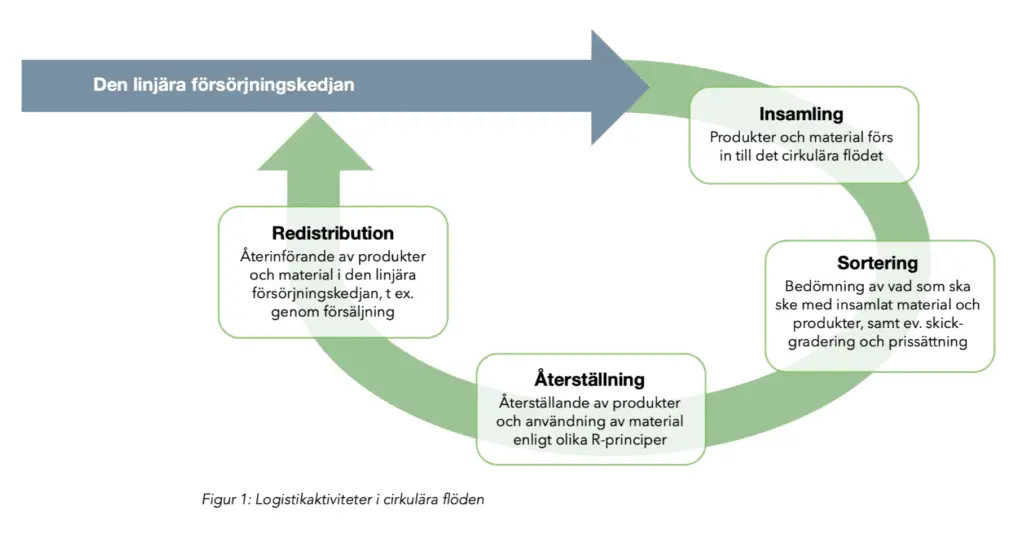
De cirkulära logistikflödena kan delas in i fyra övergripande aktiviteter som alla har sina egna utmaningar: collection, sorting, recovery, redistribution, se figur 1 ovan. Vi kan se dem som länkar i en kedja som tillsammans avgör om en cirkulär affärsmodell blir lönsam. Varje länk behöver fungera effektivt – men också samspela med de andra.
Insamling
Vad gäller insamling (collection) är detta kritiskt för att kunna få ut produkter från kundernas garderober och garage och på så sätt få i gång den cirkulära verksamheten. Bekvämligheten är här en central framgångsfaktor där logistiken ofta spelar en avgörande roll. Genom att erbjuda ett brett alternativ av olika insamlingsmöjligheter såsom upphämtning i hemmet eller inlämning via butiker, kan bra förutsättningar för en cirkulär affär skapas. Samtidigt kräver insamlingslogistiken också kostnadseffektivitet. Kostnaderna för transporter och personal blir snabbt höga i förhållande till värdet på de produkter som samlas in. Dessutom är volymerna ofta små och ojämna, vilket gör det svårt att skapa skalfördelar.
Sortering
När produkterna väl har samlats in sker en sortering i en eller flera led. Här avgörs de insamlade produkternas vidare öde, dvs. om de ska säljas vidare, repareras, eller återvinnas. Ur ett logistiskt perspektiv handlar sortering både om att skapa effektiva processer för kvalitetsbedömning, prissättning och hantering, och om att avgöra var sorteringen ska ske. Vissa detaljhandelsföretag väljer exempelvis att sortera direkt i lokala butiker om sådana finns, vilket minskar transportbehovet men kräver tid och inte minst kompetens hos butikspersonalen. I andra fall organiseras sorteringen centralt i särskilda anläggningar, vilket möjliggör skalfördelar och specialiserad kompetens, men samtidigt också ökar transportkostnaderna.
Återställning
I nästa steg, återställning (recovery), sker den fysiska återställningen av produkterna, t.ex. reparation, rengöring, komponentbyte eller annan förädling. För många detaljhandelsföretag innebär detta att helt nya processer måste etableras, ibland inom företaget men ofta i samarbete med externa aktörer såsom tex specialiserade reparationsföretag. En återkommande svårighet när dessa kedjor byggs är ofta osäkerheten i tillgången på insamlade produkter, både i volym och kvalitet. Det gör planering, kapacitetsutnyttjande och resursallokering mer komplexa i jämförelse med de (ofta) mer förutsägbara linjära flödena.
Redistribution
Avslutningsvis är redistribution, eller återförande, också en viktig aktivitet som handlar om att föra tillbaka de insamlade produkterna eller materialen till marknaden igen så att den cirkulära loopen stängs. Precis som vid insamling strävar många företag efter att integrera den cirkulära distributionen med sina befintliga linjära flöden, till exempel genom att sälja begagnade produkter i samma butiker som nya, eller via samma e-handelsplattformar. På så sätt kan befintlig infrastruktur, personal och logistikprocesser utnyttjas, vilket kan minska de totala kostnaderna. Med detta följer dock också många utmaningar. Ett exempel som lyfts i vår studie är den dubbla osäkerheten vad gäller efterfrågan såväl som tillgång på produkter att sälja. I samband med prognostisering behöver man också förstå samspelet i efterfrågan mellan de linjära och cirkulära produkterna då en. kombination kan bidra till merförsäljning såväl som en viss kannibalisering.
Insikter från projektet
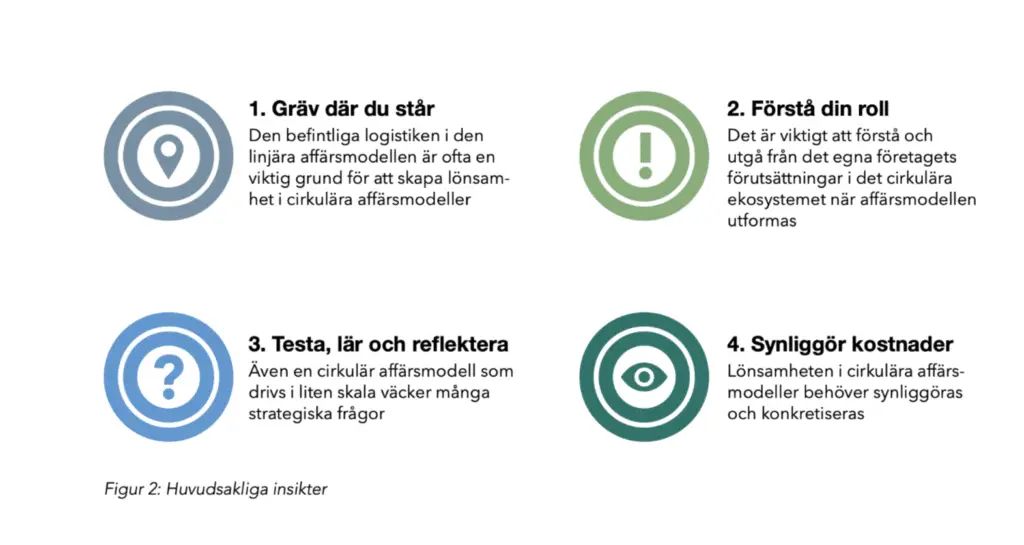
Huvudresultaten från vår studie kan sammanfattas med fyra grundläggande insikter (se figur 2 ovan) som vi kort kommenterar i det följande.
1. Gräv där du står
En viktig första insikt bygger på att det befintliga, linjära logistiksystemet spelar en viktig roll vid utformningen av cirkulära flöden. Den linjära logistiken utgör ofta en stabil grund som kan anpassas och byggas vidare på. Eventuella butiker, lager, IT-system och samarbeten med logistikleverantörer som redan finns på plats kan användas även för insamling, sortering och hantering av cirkulära produkter. Genom att integrera de nya flödena med de gamla kan synergieffekter och kostnadsbesparingar skapas. Samtidigt är det viktigt att påpeka att det befintliga logistiksystemet också sätter gränserna för vilken eller vilka cirkulära affärsmodeller som är realistiska och möjliga att genomföra och det gäller därmed att förstå på vilket sätt den linjära verksamheten kan utnyttjas.
2. Förstå din roll i ekosystemet
Cirkulära affärsmodeller och deras underliggande logistiklösningar bör aldrig designas i ett vakuum. Utöver att gräva där man står vad gäller de linjära logistikförutsättningarna måste också företagets unika förutsättningar, produkter och samarbeten i den cirkulära omgivningen förstås. Detta är avgörande för att man snabbt ska kunna etablera ”rätt” cirkulär affärsmodell. Kunder och deras önskemål och förväntningar, andra cirkulära aktörer som redan finns i det omgivande cirkulära ekosystemet (konkurrenter såväl som potentiella samarbetspartners), och nya tech-lösningar är exempel på några faktorer som behöver förstås. Precis som i utformningen av linjära affärsmodeller handlar det här om att förstå ”existensberättigandet” av den föreslagna affärsmodellen och därmed kunna se hur värde kan skapas, både ekonomiskt, socialt och miljömässigt. Inom ramen för denna analys spelar ofta logistikfrågor en stor roll, exempelvis i samband med att lämpliga samarbeten etableras och informationsflöden utformas som understödjer affärsmodellen.
3. Testa, lär och reflektera
En annan insikt från vårt projekt är att även små pilotprojekt inom cirkularitet, exempelvis en begagnatförsäljning i liten skala, sätter fingret på en rad olika logistikrelaterade frågor som rör exempelvis ansvarsfördelningar, vad som egentligen ska samlas in och säljas, lagerhållning, samarbeten och prissättning. Det är därför viktigt att få in logistiken tidigt i utvecklingsarbetet – annars riskerar initiativen att bli ineffektiva och svåra att skala upp. Samtidigt fungerar dessa små initiativ som viktiga lärplattformar. De gör det möjligt att testa och förstå olika logistikupplägg, analysera kundbeteenden och förstå kostnadsstrukturer innan större investeringar görs. Vi tycker oss se att de företag som vågar experimentera i liten skala, men samtidigt dokumenterar och analyserar sina lärdomar systematiskt, har bäst förutsättningar att bygga större, hållbara cirkulära logistiklösningar på sikt.
4. Synliggör kostnader
Till sist, en ytterligare lärdom som vi sett hos många av de företag vi har intervjuat är att det ofta är svårt att konkret visa om och hur den cirkulära affärsmodellen är lönsam. En typisk orsak till detta är att en del kostnader för exempelvis transporter, personal och hantering i samband med den cirkulära verksamheten inte på ett enkelt sätt kan separeras från den linjära verksamheten – en del kostnader tenderar att döljas i mer eller mindre fasta kostnader som framförallt härrör till den linjära verksamheten. I praktiken kanske detta inte gör så mycket, men vi kan konstatera att synliggörande av inblandade kostnader hjälper till att sätta fingret på och underlätta ett mer systematiskt förbättringsarbete. Det är också viktigt att resonera om lönsamhet utifrån ett bredare perspektiv där lönsamhet adresseras på olika nivåer, exempelvis produkt- och ordernivå, kategorinivå, affärsmodellnivå, eller företaget som helhet. Vad som är ”rätt” nivå att adressera varierar antagligen – det viktiga är att lyfta fram lönsamheten åtminstone på någon nivå. I sammanhanget är det också viktigt att poängtera att logistiken inte bara bidrar till lönsamhet genom sänkta kostnader, utan också höjda intäkter, vilka om möjligt är ännu svårare att uppskatta. Exempelvis skapar logistiken genom nya bekväma kundlösningar möjligheter till ökad omsättning och att nya kundsegment attraheras, och miljömässigt möjliggör logistiken längre produktlivscykler och minskat behov av nya råvaror.
Avslutande ord
För att cirkulära affärsmodeller i detaljhandeln ska bli (mer) lönsamma behövs mer kunskap och ett större fokus på den underliggande logistiken. Företag som tidigt lyckas få in logistikfrågor i den cirkulära utvecklingen står bättre rustade att skapa konkurrensfördelar, både ekonomiskt och miljömässigt. Vår förhoppning är att de insikter som detta projekt bidragit med kan inspirera fler att inte se logistik som ett hinder, utan som en nyckel till att på allvar ta sig an övergången till en mer cirkulär ekonomi.
Fortsatt forskning
Det nu avslutade ASTER-finansierade projektet har haft stor hjälp av ett annat parallellt pågående forskningsprojekt som finansieras av Handelsrådet under åren 2025-2026. Inom ramen för detta projekt kommer vi nu inte bara undersöka detaljhandelns nuvarande logistik, utan också blicka framåt och undersöka vilka logistikförmågor som svenska detaljhandelsföretag behöver för att utforma konkurrenskraftiga, lönsamma cirkulära affärsmodeller i framtiden. Detta kommer ske genom en Delphi-studie som genomförs under vintern 2025-2026. Den som är intresserad är förstås varmt välkommen av höra av sig.
Erik Sandberg är professor i logistik på Linköpings universitet.
Arne Andersson är senior e-handelsexpert på Svensk Handel.