Marks & Spencer, a retail chain specializing in groceries, clothing, and home furnishings, has chosen TGW Logistics as its partner for a new robotized distribution center scheduled to be completed in the spring of 2029. TGW Logistics describes the agreement as one of the most important in its 55-year history.
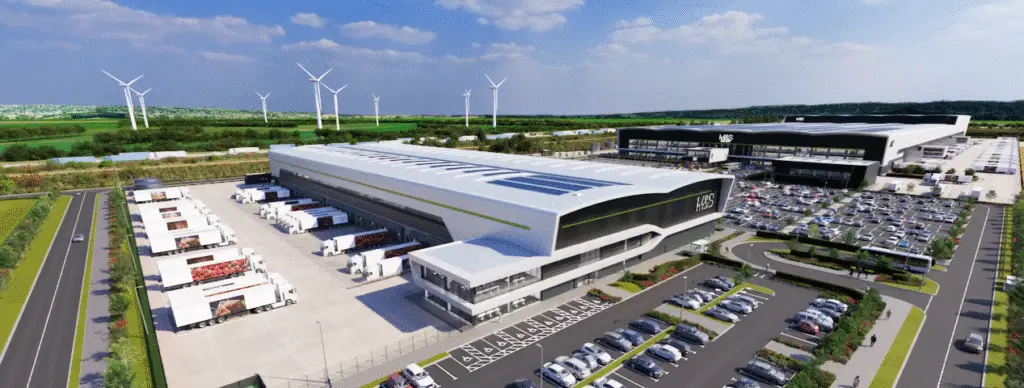
The distribution center is being built in Daventry, about 10 mil north of London, for Marks & Spencer’s food division, M&S Food. The goal is for the distribution center to set the standard for innovation and efficiency and become a benchmark for store replenishment in the United Kingdom. Through intelligent automation, M&S Food is said to be significantly reducing manual handling and increasing picking accuracy, which over time will lower costs and improve the company’s customer service.
– We are pleased to partner with Marks & Spencer on their automation journey. Together, we have developed a solution tailored to the future demands of the grocery retail industry that will set new standards for innovation and efficiency. “TGW’s technology will enable and support M&S Foods’ long-term growth,” says Joel Garbutt, Sales Manager for Northern Europe at TGW Logistics.
The distribution center will be divided into an ambient-temperature area and a refrigerated area. The ambient-temperature area will include a high-bay warehouse for pallets and a shuttle system, supported by a fleet of autonomous robots that handle the transport of pallets from goods receiving to the warehouse. Additional robots will handle the automatic loading of roll cages for in-store restocking. The refrigerated area will feature a high-performance shuttle system that buffers and sequences trays for automated loading into roll cages. Both zones will be interconnected by an energy-efficient conveyor system.
Marks & Spencer is one of the UK's leading retail chains, with over 1,000 stores and an e-commerce platform offering fashion, groceries, and home goods. The company was founded in 1884, has 65,000 employees, and has annual revenue of approximately 13.9 billion pounds (2024).