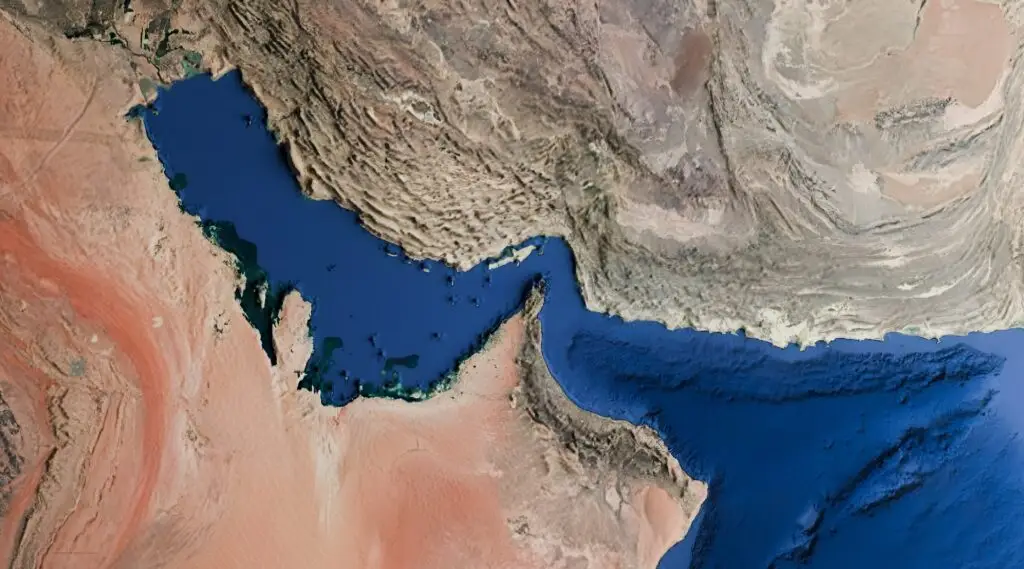
It is now clear to most people that the Strait of Hormuz is one of the world’s most important shipping lanes. About 20 percent of global oil trade passes through the strait, making it a strategically vulnerable supply route. Against this backdrop, the closure of the strait in recent months has prompted the Gulf states to intensify their efforts to build alternative transportation systems.
One person who has spoken out clearly on this issue is Sultan Ahmed Al Jaber of the United Arab Emirates, CEO of the Abu Dhabi National Oil Company, who recently stated that:
”Too much of the world's energy still flows through too few chokepoints. That is precisely why the United Arab Emirates decided to invest in infrastructure that bypasses the Strait of Hormuz”.
And the entire region is now moving in the same direction. At a summit in 2026, the leaders of the Gulf Cooperation Council (GCC) —Bahrain, the United Arab Emirates, Kuwait, Oman, Qatar, and Saudi Arabia—agreed to accelerate the construction of new pipelines and infrastructure projects to create alternative export routes and eliminate, or at least reduce, Iran’s ability to use the strait as a geopolitical weapon. Businessman Badr Jafar, who serves as the United Arab Emirates” special envoy for business and philanthropy, wrote in the Financial Times in early April that the Gulf states will never ”return to a position of strategic dependence on a narrow strait controlled by an unpredictable neighbor.”.
Alternative transportation routes are being expanded
Plans and projects to diversify away from the Strait of Hormuz have been on the drawing board for decades and have been put to the test in recent months. The most important alternative transport route runs from east to west via Petroline, a pipeline that starts in Abqaiq in eastern Saudi Arabia and ends in the port city of Yanbu on the Red Sea—a solution that makes it possible to export oil without passing through the Strait of Hormuz. Petroline was built in the 1980s when Iran and Iraq, then at war, were attacking merchant ships. The pipeline’s capacity was expanded in 2019, and currently, the equivalent of 3.5–5.5 million barrels of crude oil per day can flow through the system; with expanded loading ports, the pipeline could handle 7 million barrels per day. The United Arab Emirates has also built a pipeline, the Habshan–Fujairah pipeline, which transports oil to a port outside the Strait of Hormuz, with a capacity of nearly 1.8 million barrels per day. Iraq is also developing alternative transport routes through Turkey to the Mediterranean Sea to reduce its dependence on the Persian Gulf. During this year’s blockade of the Strait of Hormuz, exports via these routes increased significantly, which helped mitigate the effects of the blockade.
The Gulf States Are Picking Up the Pace
Following the events of 2026, several countries have accelerated existing pipeline projects and launched new ones. One example is the United Arab Emirates’ construction of a new pipeline that, upon completion in 2027, will double the country’s export capacity outside the Strait of Hormuz. Saudi Arabia is also expanding its export terminals on the Red Sea and is discussing an expansion of the Petroline. In addition to these initiatives, more extensive regional energy corridors are being discussed, including one via Jordan, which would connect the Middle East to Europe and Asia.
Against this backdrop, it is clear that a strategic shift is taking place—from an almost total dependence on maritime shipping through the Strait of Hormuz to a more diversified export structure. But it takes time and costs many billions to develop this alternative structure. And even if all the pipelines in use today were utilized to their fullest capacity, they could collectively transport only half of the approximately 20 million barrels of crude oil that flow through the Strait of Hormuz each day. This means that a closure of the Strait would result in a shortfall of at least 10 million barrels per day—at least in the short term.
Catalyst for Resilience
The positive aspect of the 2026 Hormuz crisis is that it has served as a catalyst for change, making the diversification of transport routes and increased resilience a strategic priority for the Gulf states. At the same time, it is clear that alternative systems will not fully replace the Strait of Hormuz in the foreseeable future, but will serve as important alternatives and complements that, over time, may reduce the strait’s geopolitical significance.
—
By Stefan Karlöf